

In Formula 1, speed wins races, but strategy wins championships. Oscar Piastri’s sprint charge in Qatar was the first moment this year where both elements aligned perfectly for the Australian. After six rough weekends spent fighting an unstable McLaren, he arrived at Lusail needing not just a good result, but a flawless one. The 1:20.055 sprint pole lap showed he had the raw pace. The sprint itself proved he could convert that pace into a clinical result under immense pressure (Piastri Sprint Charge).
But what made this drive special wasn’t only the victory — it was the way Piastri managed every phase of the sprint: the launch, the tyres, the energy deployment, and the psychological fight against Norris, Russell, and Verstappen. Qatar wasn’t simply about going fast. It was about being smarter, calmer, and more aggressive than anyone else on the grid. And in that sense, the piastri sprint charge stands as his most complete performance of 2025.
A Sprint Victory Built on Tire Intelligence and Calm Control –Piastri Sprint Charge

McLaren’s strength in Qatar wasn’t just its raw pace — it was its ability to preserve tyres in the sprint’s hottest sectors. Formula1.com highlighted that Lusail’s low degradation suited Piastri’s smooth inputs, allowing him to push harder than Norris without risking surface overheating. Piastri’s tyre data showed a cleaner thermal curve than any driver in the top ten, giving him confidence to attack hard through Turns 6–10 where heat typically builds. While Russell attempted an early challenge, his tyres faded almost instantly. Norris, aware of the title stakes, managed his pace more conservatively. Piastri, meanwhile, balanced aggression and control with unusual maturity, proving he understood the fine line between pace and preservation.
Why Piastri’s Sprint Attack Fit the Qatar Layout Perfectly (Piastri Sprint Charge)

Lusail is a track that rewards confidence more than outright bravery. The long, sweeping corners demand a car that rotates at high speed without stepping out. For six consecutive rounds, Piastri didn’t have that. But McLaren’s revised rear stability package allowed him to lean on the car mid-corner in a way he had been unable to all season. The Age reported that Piastri gained most of his lap time in the fast left-handers by committing early and trusting the rear to hold. MotorsportWeek added that the team’s latest aerodynamic tweaks allowed him to exit corners with higher minimum speed. In other words, Qatar wasn’t random luck — it was the perfect combination of circuit, setup, and style.
How Norris’ Conservatism Became Piastri’s Advantage –Piastri Sprint Charge

Pressure does strange things to Formula 1 drivers, and Norris felt every bit of it this weekend. Leading the championship, he couldn’t afford a collision in the sprint, especially not with his teammate. That caution dictated his entire approach. He avoided risky passes. He refused to challenge Russell. And he made no effort to pressure Piastri’s DRS window. It was logical — but costly. The Race described Norris’ sprint as “a drive of survival rather than ambition,” and that seems accurate. In trying to protect his championship, he inadvertently handed Piastri momentum and a psychological foothold. The gap shrank because Norris hesitated while Piastri attacked.
The Collapse of Verstappen and Hamilton Amplified the Moment

If Verstappen and Hamilton had delivered even average performances, Piastri’s sprint win might have felt routine. Instead, both former champions fell apart. Verstappen’s RB21 bounced so violently that he abandoned his first Q3 run, visibly frustrated by the porpoising returning at the worst time. Starting deep in the field, he struggled to escape dirty air. Hamilton’s Ferrari issues were even worse. Knocked out in Q1, he spent the sprint wrestling a car he described as “snapping without warning.” Motorsport.com confirmed that Ferrari had completely misjudged the low-downforce setup window. With two championship-calibre opponents removed from contention, Piastri’s win gained enormous strategic weight.
The Sprint Execution: A Masterclass in Precision Under Pressure
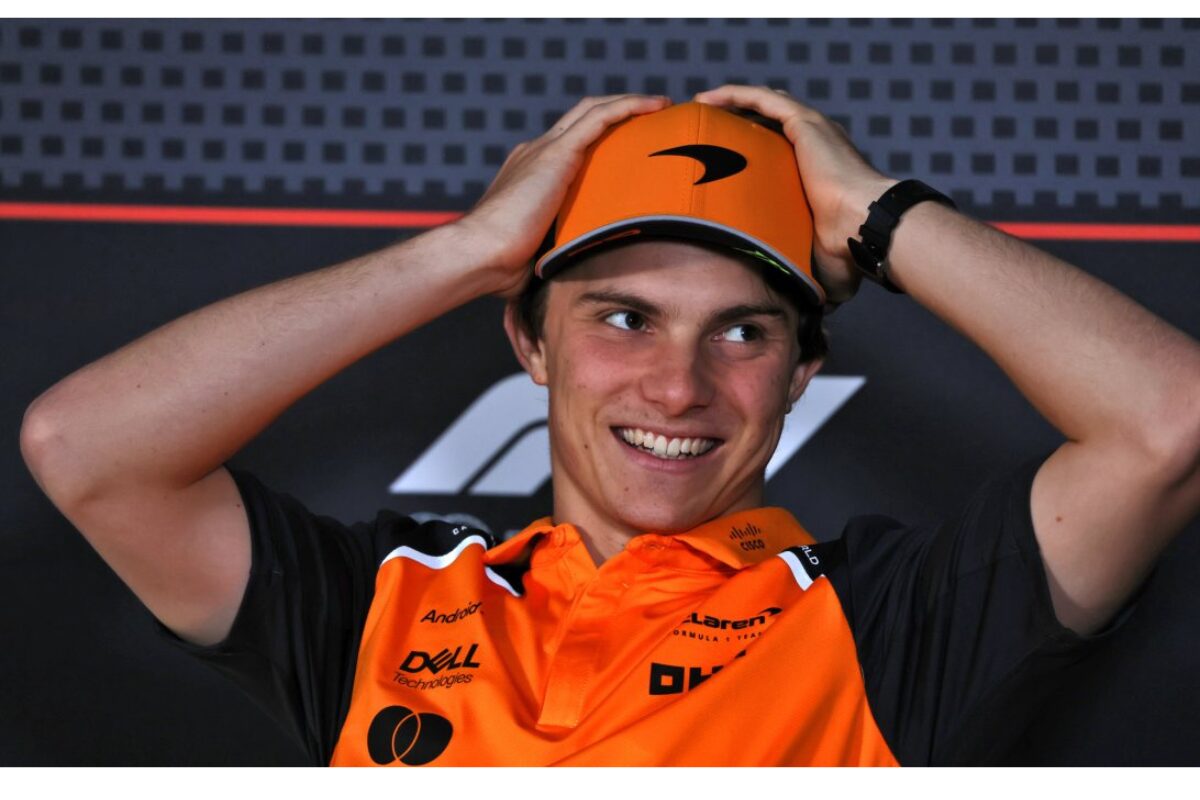
The race itself showed a driver who understood the stakes. Piastri’s launch was clean. His defence into Turn 1 was measured, not frantic. His energy deployment across the first three laps showed careful planning, creating a two-second buffer before Russell’s tyres fell away. Norris, hidden behind Russell, chose safety. Alonso held firm in the midfield. And Verstappen could not find a rhythm. Formula1.com’s sector analysis showed Piastri was not the fastest in every micro-sector, but he was the most consistent — and consistency wins sprints.
It wasn’t dominance by speed.
It was dominance by control.
Table: Tactical Breakdown of the Piastri Sprint Charge
| Tactical Element | Outcome |
|---|---|
| Tyre Management | Strongest in top 10 |
| Energy Deployment | Perfect balance, early gap |
| Sprint Start | Clean, defensive perfection |
| Norris Pressure | Minimal due to risk aversion |
| Rivals’ Form | Verstappen/Hamilton collapse |
Oscar Piastri’s sprint charge wasn’t only a show of speed — it was a strategic masterpiece. He took the pressure of a shrinking season, paired it with a circuit that suited his style, and delivered the most important 19 laps of his 2025 campaign. With rivals collapsing and Norris playing defence, the Australian turned Qatar into the moment that reignited the title fight. The championship now swings with new momentum, and for the first time in months, Piastri looks like the driver holding the sharpest blade.


