

For too long, the upper echelons of professional tennis have lived in a world of safety nets and second chances. The One Point Slam at the Australian Open 2026 just tore that world apart. We’ve been told for decades that the gap between a “club pro” and a Top 10 star is an unbridgeable ocean, but one night in Melbourne proved it’s more like a narrow stream.
This wasn’t just a tennis exhibition; it was a brutal demolition of the idea that rankings equal invincibility. When you strip away the luxury of “playing your way into a match,” you’re left with the raw, terrifying truth: under enough pressure, even a Grand Slam champion can look like a nervous junior. The format didn’t break the game—it finally made it honest.
The “Brick Wall” vs. The Ego
Jordan Smith didn’t win because he was “lucky.” He won because he understood the assignment while the pros were busy overthinking their brand. As a coach at Castle Hill Tennis Academy, Smith didn’t have a sponsorship deal to protect or a legacy to uphold. He just had a “brick wall” strategy and a dream of a Sydney mortgage. The pros, on the other hand, were paralyzed by the fear of becoming a meme.
The “Amateur Advantage” was the perfect psychological poison. By giving amateurs two serves while limiting pros to one, the organizers created a scenario where the world’s best weapons became their greatest liabilities. The table below breaks down the reality of why amateur tennis logic beat out professional arrogance:
| The Performance Gap | Jordan Smith (The Coach) | The Pro Elite (The Stars) |
|---|---|---|
| Service Strategy | High-percentage “kick” serves | Panic-induced flat serves |
| Mental Stakes | Pure opportunity; $1M gain | Reputation damage; $1M risk |
| Tactical Discipline | “Keep it deep, wait for the error” | “Hit a winner, end it now” |
| Point Duration | Happy to grind 20+ shots | Looking for the 1-shot exit |
Sinner’s Collapse and the Myth of Professionalism
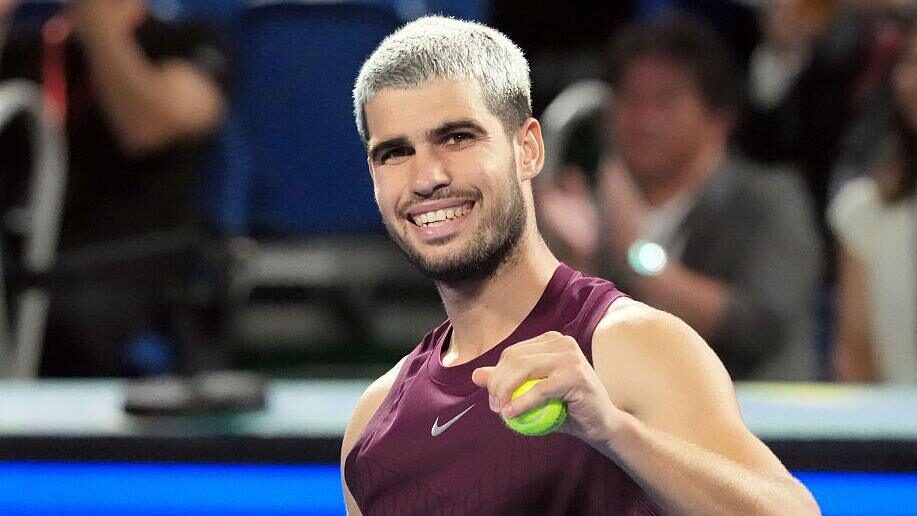
Watching Jannik Sinner double-fault his way out of a million dollars was the most refreshing thing to happen to tennis news in years. It exposed a fundamental flaw in the modern pro: they are programmed for repetition, not sudden-death. Sinner, Carlos Alcaraz, and Coco Gauff are masters of the long game, but when the One Point Slam demanded a single moment of perfection with no safety net, they blinked.
The “pros” didn’t lose because they lacked skill; they lost because they lacked the “park tennis” grit that guys like Smith use every day. Consider the carnage:
- Sinner choked on a single serve, a shot he hits thousands of times a week.
- Nick Kyrgios was so distracted by the spectacle that he forgot to play the ball.
- Pros were visibly rattled by the “Rock, Paper, Scissors” start, proving they are too reliant on tradition.
- The “Amateur Advantage” proved that a high-level coach with two serves is statistically a nightmare for a pro with one.
Joanna Garland: The Only Adult in the Room
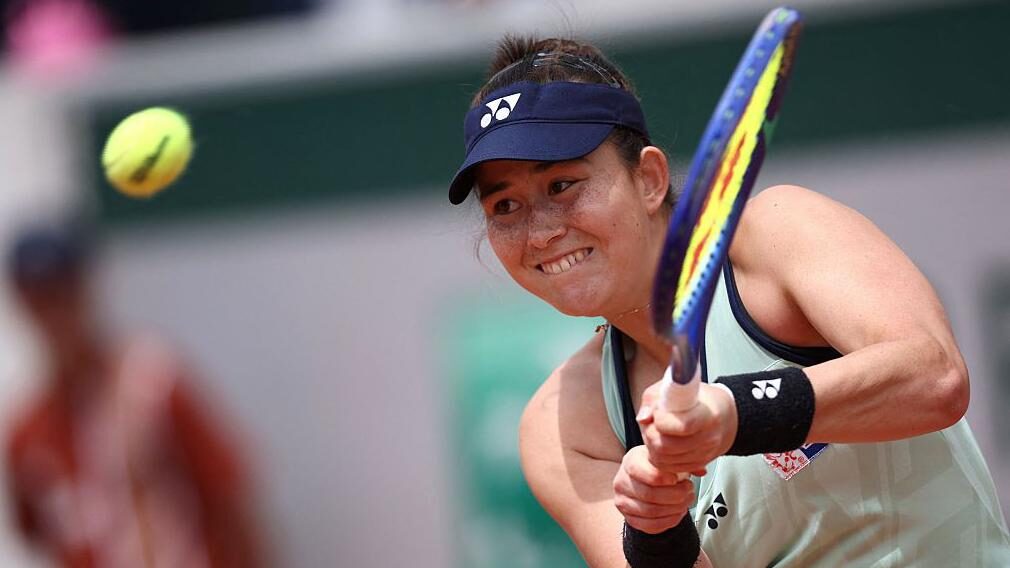
While the superstars were busy crumbling, Joanna Garland showed us what actual professional composure looks like. Ranked 117th and playing under the “Radiohead” moniker, she was the only pro who didn’t let the $1 million prize cloud her judgment. She didn’t treat it like a circus; she treated it like a job. Garland’s run to the final was a masterclass in staying out of your own head.
It’s ironic that the Joanna Garland One Point Slam runner up finish will likely be more famous than her WTA 125 titles. She outlasted Zverev and Vekic not by being flashier, but by being more disciplined. In a night of loud egos, her quiet efficiency was the only thing that kept the professional side of the bracket respectable. She proved that the lower-ranked pros have the hunger that the pampered Top 10 have clearly lost.
Why Tennis Needs More “Gimmicks”

The purists are already whining that this “ruins the integrity” of the sport, but the results of the Australian Open exhibition event 2026 suggest the opposite. Tennis is dying for stakes that people actually understand. A $1 million winner-take-all point is infinitely more compelling than a round-robin match in a meaningless tournament. Jordan Smith’s win is a marketing miracle for the sport.
The ROI on this event is staggering:
- It connects the grassroots (Castle Hill) to the global stage.
- It provides a life-changing tennis prize money story that isn’t just “rich player gets richer.”
- It forces the elite to respect the community coaches who actually build the sport.
- It generates more “can’t-miss” moments in ten seconds than most five-setters do in five hours.
Conclusion: The New World Order – One Point Slam
The story of the 2026 One Point Slam isn’t about a lucky break; it’s about a wake-up call. Jordan Smith walked into Rod Laver Arena as a Sydney coach and walked out as a millionaire because he was the only one on that court who wasn’t afraid to lose. He proved that when you take away the safety of the long match, the “kings” of the court are surprisingly easy to dethrone.
Whether you’re looking for where to watch the One Point Slam highlights or debating the rules on social media, you have to admit: you haven’t been this entertained by a single point in years. Tennis needs to stop hiding behind tradition and start embracing the chaos. Jordan Smith has the $1 million in the bank to prove it. The question isn’t whether this format works—it’s how long until every other tournament realizes it’s the future.


