

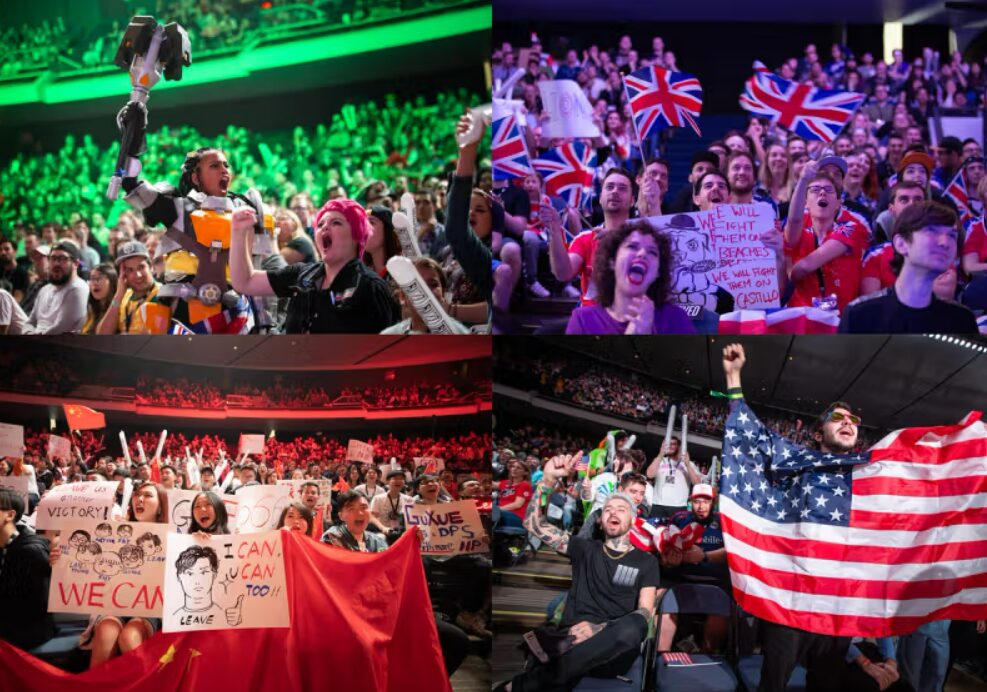
The Overwatch World Cup is returning in 2026 after a two-year hiatus, and Blizzard is going bigger than ever. The revamped tournament features a new qualification format, expanded national team roster, and three international events leading to a grand finals in Seoul . The Overwatch World Cup 2026 schedule promises the most competitive international Overwatch tournament since 2019.
Here is everything you need to know about the tournament.
New Qualification Format
The 2026 World Cup introduces a three-stage qualification process designed to give more countries a chance to compete. The Open Qualifiers run from April to June, open to any national team that registers. Teams compete in online tournaments to earn points.
The Regional Finals take place in July and August, with the top teams from each region competing in LAN events. Six regions will host finals: North America, South America, Europe, Asia-Pacific, Middle East, and Africa . The top two teams from each regional final qualify for the main event.
The Main Event will be held in Seoul, South Korea in November, featuring 16 national teams competing for the World Cup trophy .
Here is the breakdown of the OWWC 2026 schedule:
| Stage | Dates | Location | Teams |
|---|---|---|---|
| Open Qualifiers | April 1 – June 30, 2026 | Online | All registered nations |
| Regional Finals (NA) | July 12-15, 2026 | Los Angeles, USA | Top 8 from NA qualifiers |
| Regional Finals (EU) | July 19-22, 2026 | Copenhagen, Denmark | Top 8 from EU qualifiers |
| Regional Finals (Asia) | August 2-5, 2026 | Tokyo, Japan | Top 8 from Asia qualifiers |
| Regional Finals (SA) | August 9-12, 2026 | São Paulo, Brazil | Top 8 from SA qualifiers |
| Regional Finals (ME & Africa) | August 16-19, 2026 | Dubai, UAE | Top 8 from ME/Africa qualifiers |
| Main Event | November 14-22, 2026 | Seoul, South Korea | 16 qualified nations |
Returning National Teams
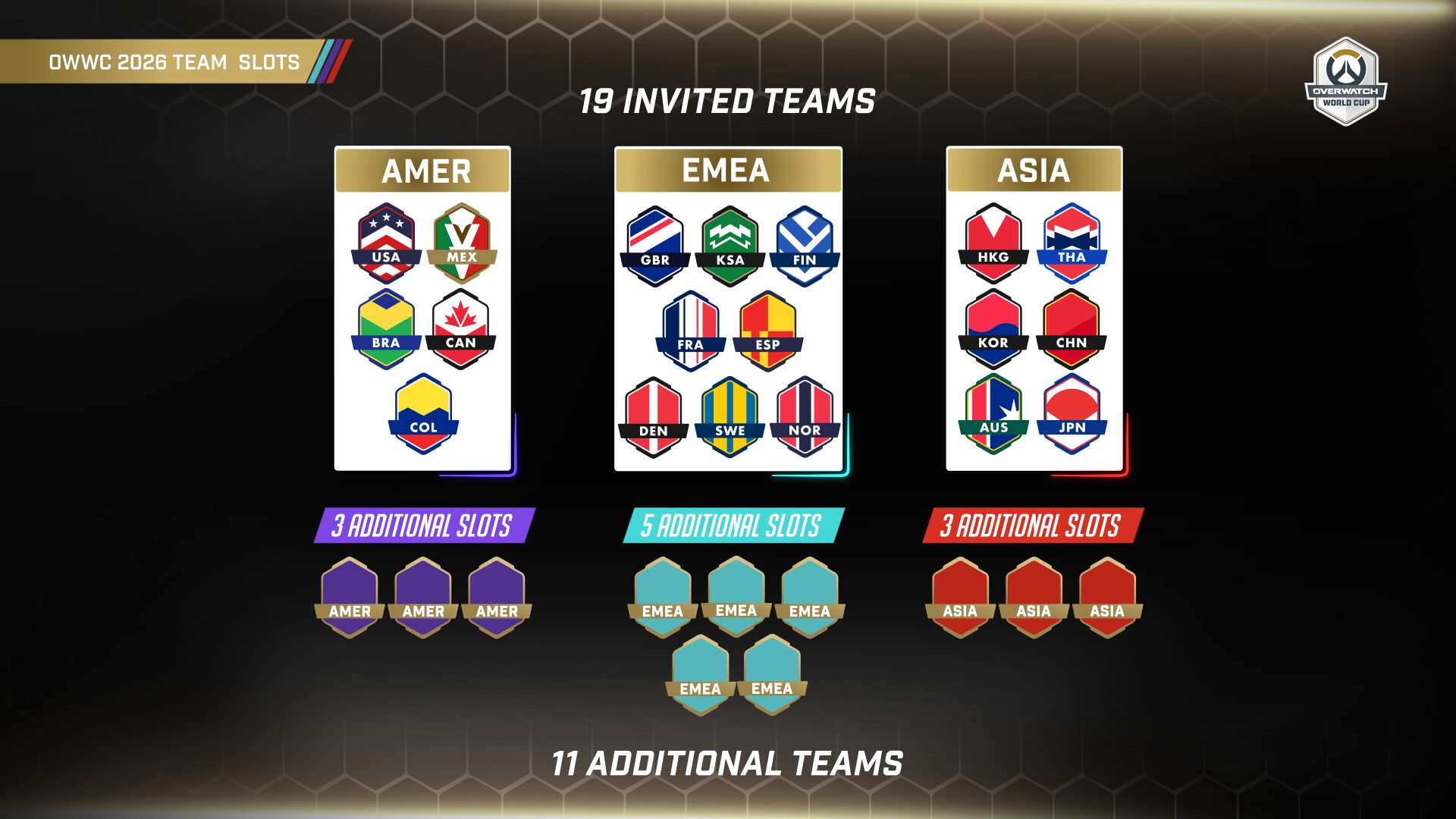
Several national teams have already secured spots based on their performance in the 2023 and 2024 Overwatch League seasons. South Korea, the two-time defending champion, automatically qualifies for the main event . China, United States, Canada, and France also receive automatic qualification based on their 2023 World Cup performances.
The remaining 11 slots will be filled through the Regional Finals process. Early favorites include Saudi Arabia, which has invested heavily in its esports infrastructure, Australia, which consistently overperforms in international competition, and United Kingdom, which fields a roster of Overwatch League veterans.
Prize Pool and Format
The 2026 World Cup features a $2 million prize pool, the largest in tournament history . The winning team receives $500,000, with the runner-up receiving $250,000 and third place receiving $150,000. All participating teams receive a minimum of $10,000 to cover travel and expenses.
The main event format begins with a group stage featuring four groups of four teams playing round-robin matches. The top two from each group advance to a single-elimination knockout bracket. All matches are best-of-five except the grand finals, which are best-of-seven.
Regional Growth
The inclusion of Regional Finals in the Middle East and Africa represents a significant expansion for Overwatch esports. Dubai will host the first major Overwatch tournament in the region, with local organizers expecting sellout crowds. Blizzard has partnered with regional esports organizations to build grassroots support ahead of the event.
South America’s inclusion as a standalone region also marks progress. Previous World Cups grouped South American teams with North America, often limiting their representation. The São Paulo Regional Finals will be the first major Overwatch LAN in Brazil since 2019.
Broadcast and Coverage
The World Cup will be broadcast on the official Overwatch esports channels, with coverage in English, Korean, Chinese, French, German, Portuguese, and Arabic. This marks the first time Arabic-language broadcasts will be available for a major Overwatch tournament.
Local broadcast partners in each region will also carry the Regional Finals, with traditional sports networks in South Korea, China, and the United States expressing interest in the main event.
